Elephant Baby Boy Numbers: A Designer’s Review
As a designer who spends half my life staring at stitch maps and the other half troubleshooting tension issues on client projects, I have learned to be skeptical of cute concepts. We all know that what looks charming on a screen does not always translate well to fabric. However, when I recently pulled up Elephant Baby Boy Numbers for a potential nursery decor line, I found myself pleasantly surprised by its practical versatility. This is not just another clip-art style graphic; it is a thoughtful collection that bridges the gap between digital cut files and tactile embroidery art.
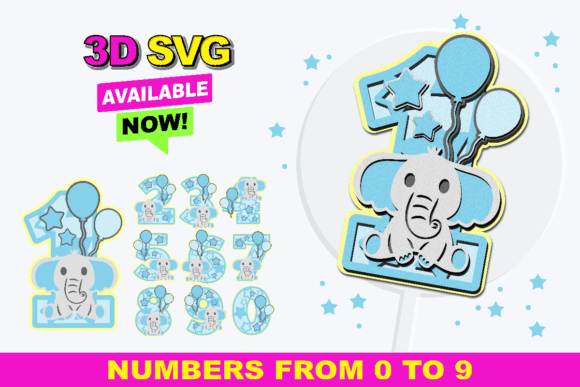
The first impression is one of softness and approachability. The design leans heavily into the Shapes category, utilizing rounded, organic lines that mimic the gentle curves of a baby elephant. For those of us working in the baby and children’s market, this visual language is crucial. Parents are drawn to safety and comfort, and sharp, aggressive angles rarely convey that message. These numbers, ranging from zero to nine, carry a whimsical weight that feels substantial without being bulky. When I visualized them stitched out, I immediately thought of their application on textured fabrics like waffle knit or soft fleece, where the smooth vector lines of the 3D SVG would contrast beautifully against the grain of the material.
Real-World Application: The Custom Sweatshirt Test
To truly evaluate a design, you have to imagine it in a real-life scenario. Let’s say you are preparing a custom order for a local boutique. The client wants a set of personalized sweatshirts for a sibling group, featuring their ages. This is where Elephant Baby Boy Numbers shines. Because the design includes numbers 0-9, you have complete flexibility for any age combination. I tested the concept mentally on a heather gray crewneck. The elephant motif acts as both a number and a decorative element, eliminating the need for additional filler graphics.
In this context, the design functions almost like an applique design, even if you are stitching it directly. The layered nature of the files suggests depth. If you were to use a fill stitch for the body of the elephant and a satin stitch for the outlines or ears, you would create a lovely tactile experience. For a handmade product intended for gift-giving, this textural variety adds perceived value. It stops being just a number and becomes a keepsake. I can easily see these working on tote bag designs for daycare bags, where durability and clear identification are key. The bold shapes ensure that the number remains legible even from a distance, which is a practical necessity for busy parents.
Navigating Fabric and Hoop Constraints
While the aesthetic appeal is strong, we must discuss the technical realities. Any experienced embroidery professional knows that design placement is everything. With Elephant Baby Boy Numbers, you need to be mindful of your hoop size. Since these are individual number files, they are likely optimized for standard hoops, but you must verify the dimensions in your software before committing to fabric. If you are working on a cap or a curved surface, the width of the elephant’s ears might require careful positioning to avoid distortion near the seams.
Fabric choice is equally critical. On thin or stretchy fabrics, such as lightweight jersey t-shirts, the density of the stitch pattern could cause puckering. I strongly recommend using a high-quality cut stabilizer to support the weight of the threads. Conversely, on thicker materials like denim or canvas aprons, this design holds up remarkably well. The 3D SVG structure allows you to manipulate layers in programs like Silhouette Studio or Cricut Design Space, giving you control over how the elements stack. This is particularly useful if you want to create a shadow effect using a contrasting thread color underneath the main elephant shape.
One area requiring caution is small-scale embroidery. If you attempt to shrink these numbers down for a tiny embroidered patch or a delicate baby onesie, the finer details—such as the eyes or trunk curls—might merge together. Always run a test stitch on scrap fabric of the same type you intend to use for the final finished product. This simple step saves hours of frustration and prevents wasted materials. Check the stitch density in your digitizing software; if it appears too dense for your specific thread type, you may need to adjust the underlay or reduce the fill slightly to maintain fabric drape.
Commercial Viability for Etsy Sellers and Makers
For the Etsy seller or small shop owner, consistency is brand currency. Elephant Baby Boy Numbers offers a cohesive look that can tie together an entire product line. Imagine offering a bundle: a numbered blanket, a matching bib, and a wall hanging. Using the same design family across these items creates a professional, curated feel that buyers trust. It elevates your craft business from a hobbyist operation to a branded entity.
Furthermore, the versatility of this collection supports various commercial embroidery avenues. Beyond apparel, consider home decor. A set of numbered pillows for a child’s room, using neutral tones like sage green, mustard, or slate blue, appeals to modern interior trends. The design works well for holiday embroidery too; picture these numbers incorporated into Christmas ornaments or Easter basket tags. The playful nature of the elephant makes it suitable for year-round sales, not just seasonal spikes.
When creating printable mockups for your online listings, remember that the digital embroidery file is only part of the equation. Your photography must highlight the texture. Show close-ups of the stitches to demonstrate quality. Buyers of personalized gifts want to see that the edges are clean and the colors are vibrant. If you are selling the physical item, emphasize the durability of the stitch work. If you are selling the design itself, ensure your licensing terms are clear. Since the product description mentions it is easy to use in cutting software, clarify whether your customers are buying the right to stitch it, cut it, or both. Transparency builds customer loyalty.
Final Designer Notes and Best Practices
Before you launch your next campaign with Elephant Baby Boy Numbers, take a moment to review your workflow. First, confirm the file formats included in the zipped folder. While the description highlights SVGs for cutting, ensure you have the appropriate embroidery formats (such as PES, DST, or JEF) for your specific machine if you are stitching rather than cutting. If these are strictly cut files, you will need to digitize them for embroidery, which requires a different skill set.
- Test on Contrast: Try stitching the design on both light and dark fabrics. You may need to adjust thread colors to ensure the elephant’s features remain distinct.
- Check Layering: If using the 3D aspect, ensure your machine can handle the thread changes efficiently. Too many stops can slow down production in a commercial setting.
- Stabilizer Selection: Match your stabilizer to your fabric. Tear-away for stable woven fabrics, cut-away for knits and stretchy materials.
- Licensing Verification: Always double-check the license agreement regarding commercial use. Some designers allow unlimited physical sales but restrict digital resale.
In conclusion, Elephant Baby Boy Numbers is a robust addition to any designer’s library. It balances charm with functionality, offering enough detail to be interesting but enough simplicity to be versatile. Whether you are creating a single personalized gift for a friend’s new baby or stocking your small shop product lineup for the upcoming season, this design holds up under scrutiny. It invites creativity while respecting the technical limits of embroidery machines. By approaching it with a critical eye and proper preparation, you can transform these digital assets into tangible, beloved items that resonate with customers.